Harnesses: Use of Harnesses in Scaffolding
Everything you need to know about working at height in the Scaffolding Industry.
16 June 2026
Tethered to Safety: Why Harness Use and NASC Guidance Are Non-Negotiable
Scaffolding is inherently hazardous. Despite massive advancements in safety technology and site management, falls from height remain one of the leading causes of workplace injuries in the UK construction sector. At KAS Scaffolding, our view is simple: one fall is one too many.
Building complex temporary structures across London and the Home Counties requires our operatives to work in highly exposed, high-risk environments every single day. That is why our approach to fall prevention isn't just about handing out equipment—it is about rigorous training, unwavering discipline, and strict adherence to industry-leading guidance.
Here is a look at how we manage the risks of working at height, the crucial role of safety harnesses, and why we rely on the NASC to set the standard.
The Gold Standard: NASC SG4 Guidance
When it comes to preventing falls in scaffolding operations, the ultimate authority in the UK is the National Access & Scaffolding Confederation (NASC). Their core guidance document, SG4, is the blueprint for safe scaffolding erection, alteration, and dismantling.
Because we actively sit on the NASC's Audit and Training & Education committees, we don't just follow SG4; we champion it.
The fundamental principle of SG4 is the creation of a "Scaffolders' Safe Zone." This is a fully boarded section of scaffolding that is protected by a single main guardrail. As long as an operative is working within this established safe zone, they are protected from falling. However, scaffolding doesn't build itself—operatives must constantly work outside of these safe zones to install the next lift or alter existing ledgers. That is where personal fall arrest systems become mandatory.
Clipping On: The Rules of the Harness
Under SG4 guidance, whenever a scaffolder is exposed to a fall risk without the protection of a safe zone, they must use a safety harness and clip on to a suitable anchor point.
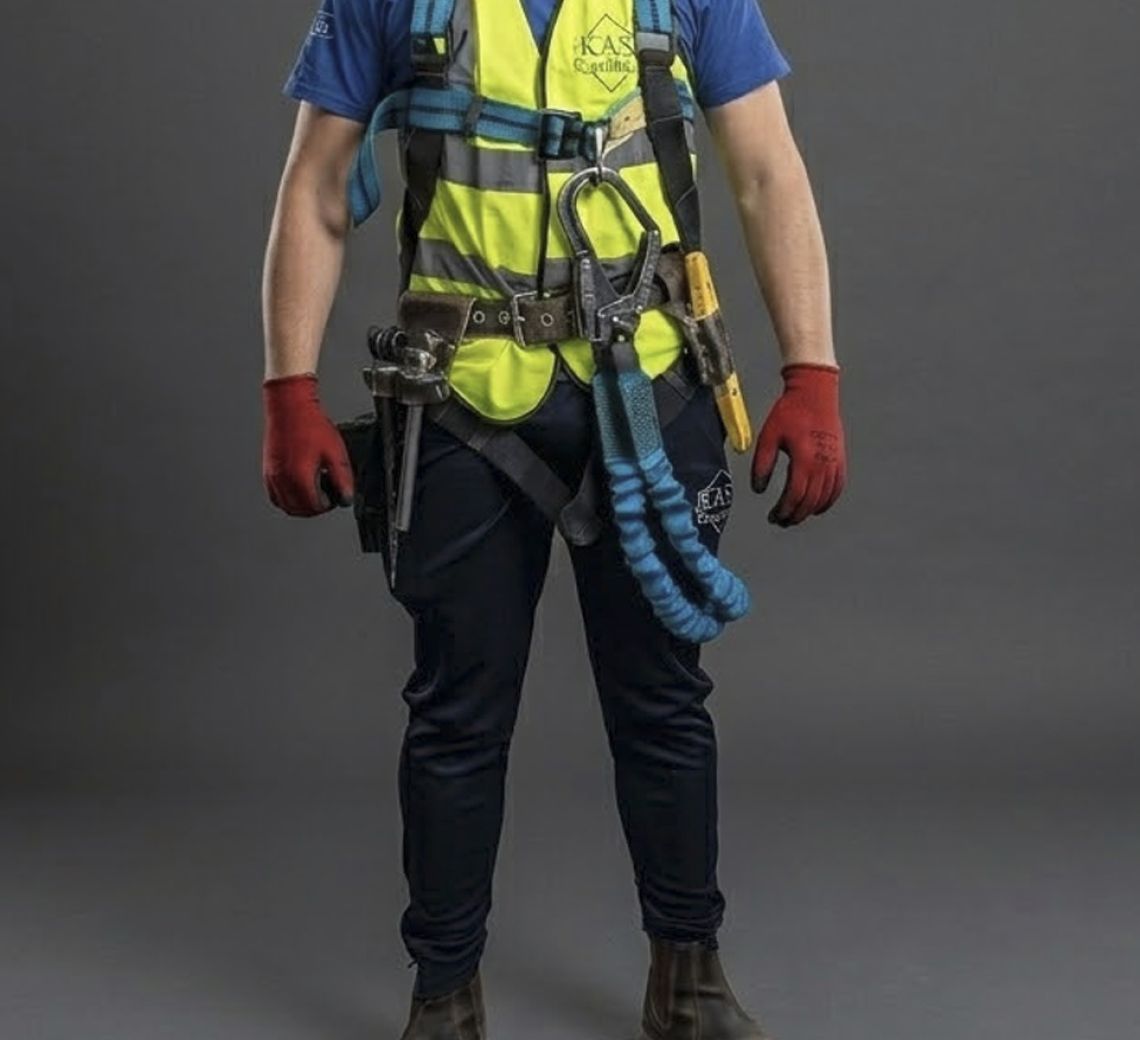
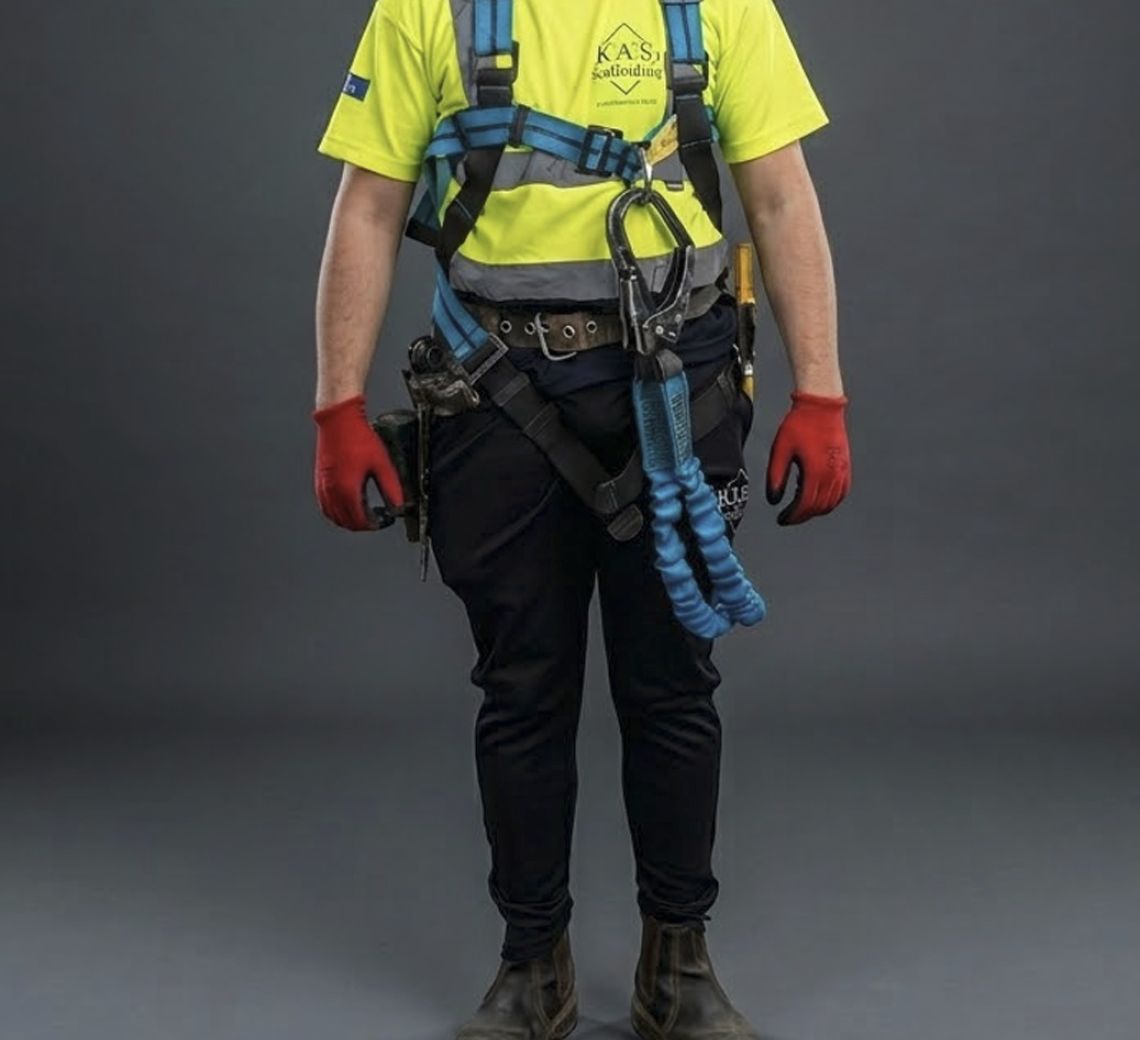
At KAS Scaffolding, the rules regarding harness use are absolute:
The Right Equipment: Our scaffolders use full-body harnesses equipped with a rear dorsal D-ring and a 1.7-metre fall arrest lanyard featuring an energy absorber. This ensures that if a fall does occur, the impact forces placed on the operative's body are significantly reduced.
The Right Anchor Points: You cannot clip on just anywhere. Operatives are trained to anchor their lanyards to structurally sound points—typically a ledger or a standard joint above head height, or at least shoulder level. Clipping to a ledger below foot level is strictly prohibited, as it vastly increases the fall distance.
Continuous Attachment: When traversing an unprotected edge, operatives utilize double-lanyard techniques to ensure they are anchored 100% of the time as they move past vertical standards.
Training for the Worst-Case Scenario
A safety harness is useless if the operative wearing it doesn't know how to inspect it, fit it, or use it properly. Through our partnership with premier training providers like the SIMIAN scheme
, every apprentice and fully qualified CISRS operative at KAS undergoes rigorous, ongoing training on fall arrest systems.
Before stepping onto a site, our teams know how to conduct pre-use visual checks on their harnesses, inspecting for frayed webbing, damaged stitching, or compromised carabiners. Any defective gear is immediately removed from service and destroyed.
Furthermore, we ensure that robust rescue plans are in place before a project begins. If a fall arrest system is deployed and an operative is left suspended, time is of the essence to prevent suspension syncope (harness pathology). Our site supervisors are trained to execute rapid, safe rescue procedures to get suspended operatives to the ground quickly.
Safety is a Culture, Not a Checklist
Providing a harness is easy; enforcing its proper use takes genuine leadership. At KAS Scaffolding, we foster a culture where safety is never compromised for speed. Our site managers conduct regular spot checks, and our operatives are empowered to stop work immediately if they feel a situation cannot be navigated in strict accordance with NASC SG4.
By combining top-tier equipment with the rigorous standards set by the NASC, we ensure that our crews go home safely at the end of every single shift—and that your project progresses without incident.